U.S.-Saudi Nuclear Deal Exposes Contradictions in American Foreign Policy
The U.S.-Saudi nuclear cooperation agreement raises significant concerns about nuclear proliferation and American foreign policy contradictions. As Congress reviews the deal, the geopolitical implications could reverberate throughout the Middle East.
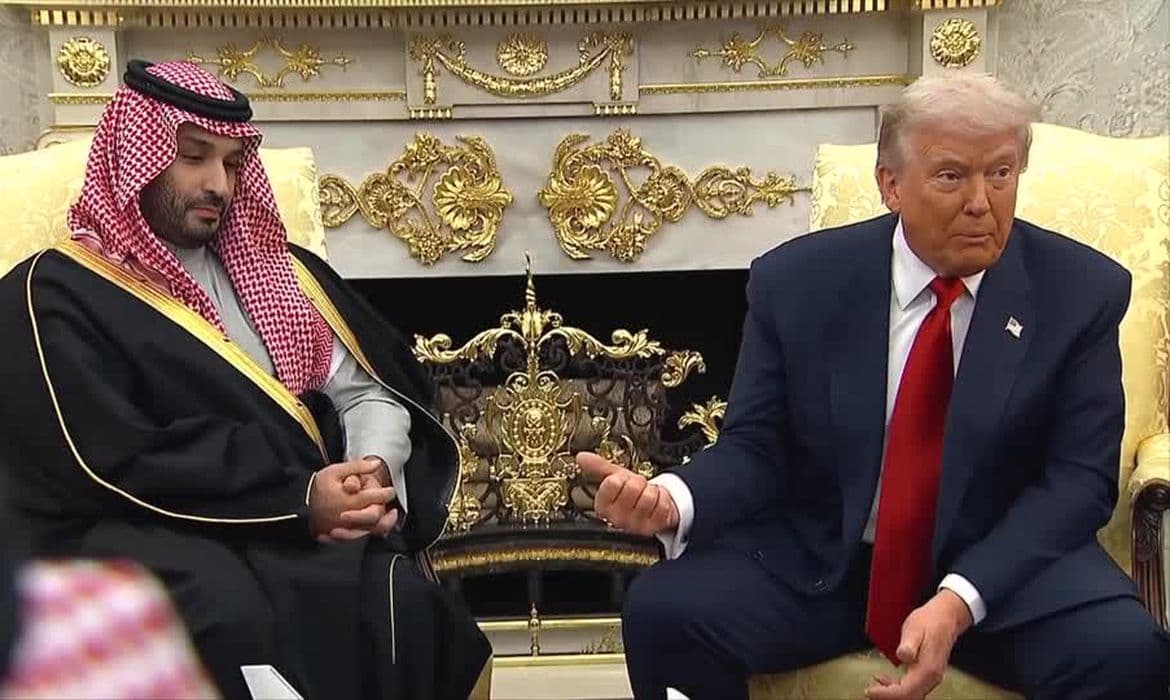
In a striking turn of events, the recently announced nuclear cooperation agreement between the United States and Saudi Arabia has thrown into sharp relief the contradictions inherent in American foreign policy regarding nuclear proliferation. This decades-long partnership, which involves significant financial investments rumored to reach into the billions, is currently under congressional review and is raising eyebrows both at home and abroad.
The irony lies in the fact that the Trump administration is poised to deepen nuclear ties with Saudi Arabia—an absolute monarchy—while simultaneously pushing a hardline stance against Iran's own uranium enrichment program. Critics argue that this move blatantly juxtaposes an intention to curb Iranian capabilities while ostensibly permitting their rivals, the Saudis, to enhance their nuclear capabilities under the veil of civilian use.
After facing backlash from Israeli officials concerned about the potential for a nuclear-armed Saudi Arabia, Trump took to social media to posit that Saudi compliance with the Abraham Accords may be a prerequisite for establishing the nuclear framework. This adds yet another layer of complexity: the Saudi leadership has indicated that any normalization with Israel hinges on solid guarantees for Palestinian statehood—terms that are currently unacceptable to Netanyahu's government.
Historian Francisco Carlos Teixeira da Silva from the Federal University of Rio de Janeiro (UFRJ) posits that this agreement not only highlights a discrepancy in U.S. nuclear policy but also acts as a desperate attempt by Trump to re-establish Saudi confidence in America’s security shield, which was perceived as weakened amid rising tensions with Iran. As stated, "This is an acknowledgment of the failure of the American shield," during a time of intense Iranian bombardment against Saudi territories.
While the Trump administration continues to assure that Saudi Arabia will not develop nuclear weapons, skepticism lingers within the international community. Experts from various NGOs assert that the Saudi refusal to sign an additional protocol allowing for surprise inspections by the International Atomic Energy Agency (IAEA) raises red flags about their nuclear ambitions.
There are growing concerns about the potential for Saudi Arabia to evolve its nuclear program beyond peaceful purposes. Notably, in 2018, Saudi Crown Prince Mohammed bin Salman declared that the kingdom would seek nuclear weapons if Iran were to acquire them. This sentiment introduces alarming uncertainty to an already volatile region.
International relations expert Roberto Goulart Menezes from the University of Brasília underscores that while Saudi Arabia remains a signatory to the Treaty on the Non-Proliferation of Nuclear Weapons (NPT), America's nuclear relationship with Riyadh sends mixed messages throughout the Middle East. He believes it is misleading to assert that the enrichment of uranium for peaceful energy purposes is entirely benign, given that future directions could deviate from the initial peaceful intentions.
The American stance appears inconsistent when contrasted with its approach toward South Korea, which has been pursuing a nuclear partnership for several decades amid a tense North Korean threat. Critics point out that Washington's apparent willingness to permit the Saudis access to uranium enrichment rights—while denying similar privileges to Seoul—exemplifies a glaring double standard in U.S. nuclear diplomacy.
Negotiations for this nuclear arrangement have evolved since 2008, yet significant progress remained elusive, particularly during the Biden administration amidst tensions exacerbated by the murder of journalist Jamal Khashoggi. However, in Trump's second term, relations between the U.S. and Saudi Arabia surged, culminating in an agreement made in the backdrop of escalating regional conflicts, namely the ongoing war involving the Houthis in Yemen, which recently halted Saudi maritime trade routes.
In summary, the U.S.-Saudi nuclear agreement, while framed as a cooperative measure to bolster energy security, carries perilous implications for global nuclear non-proliferation efforts and risks inciting a new arms race in the Middle East. As senators prepare to scrutinize the deal, the global community watches closely, weighing the potential ramifications of granting nuclear capabilities to a nation already steeped in controversy and regional tensions.
React to this story
Share this story
Stay in the loop
Get breaking presidential news delivered to your inbox daily.