Trump Administration's War on Cartels Intensifies: Latest Caribbean Strike Kills 3 in Ongoing Anti-Drug Campaign
The Trump administration's anti-cartel campaign claimed three more lives in a Caribbean Sea strike Sunday, bringing total deaths to 181 since September. Despite the Iran war, military operations against alleged drug traffickers continue intensifying across Latin American waters.
Trump Administration's War on Cartels Intensifies: Latest Caribbean Strike Kills 3 in Ongoing Anti-Drug Campaign
The Trump administration's aggressive campaign against Latin American drug trafficking operations claimed three more lives Sunday as U.S. military forces struck another vessel in the Caribbean Sea, bringing the total death toll from these controversial operations to at least 181 people since September.
Escalating Military Response
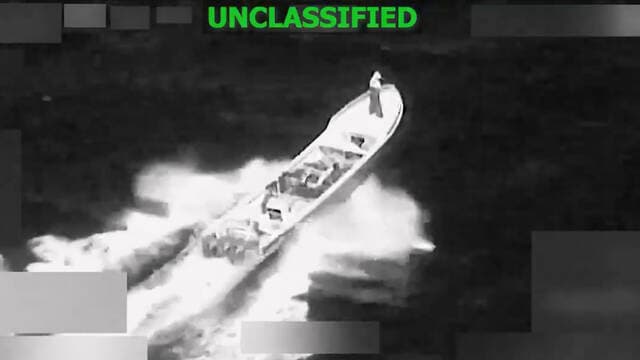
U.S. Southern Command confirmed the latest strike targeted what they described as an alleged drug-trafficking vessel operating along known smuggling routes in Caribbean waters. The military released dramatic video footage showing the boat moving through the water before a massive explosion engulfed the entire vessel in flames, killing all three occupants.
This latest action represents a continuation of President Trump's declared "armed conflict" with cartels operating throughout Latin America, a campaign that has intensified dramatically despite ongoing military commitments in the Iran war. The strikes have primarily targeted vessels in both the Caribbean Sea and eastern Pacific Ocean, with operations ramping up significantly over the past week.
Controversial Tactics Raise Questions
The administration's approach has drawn sharp criticism from legal experts and human rights advocates who question both the legality and effectiveness of these preemptive strikes. Notably, military officials have not provided concrete evidence that any of the targeted vessels were actually carrying drugs at the time of destruction.
President Trump has defended these operations as necessary measures to combat what he terms "narcoterrorism" in the Western Hemisphere. The administration argues that aggressive intervention is essential to stem the flow of illegal drugs into the United States and reduce fatal overdoses claiming American lives.
Regional Military Buildup
The strikes coincide with the largest U.S. military presence in Latin America in generations, a buildup that preceded January's dramatic raid that resulted in the capture of former Venezuelan President Nicolás Maduro. Maduro was subsequently brought to New York to face drug trafficking charges, to which he has pleaded not guilty.
This escalation demonstrates the Trump administration's commitment to treating drug trafficking as a military rather than primarily law enforcement issue, representing a significant shift in how the United States approaches the decades-long war on drugs.
Strategic Implications
The timing of these renewed strikes is particularly significant, occurring while U.S. forces remain engaged in conflict with Iran. This dual-front approach suggests the administration views the cartel threat as sufficiently serious to warrant continued military resources despite other global commitments.
U.S. Southern Command's repeated statements emphasize their focus on "known smuggling routes," indicating a systematic approach to interdicting drug trafficking networks rather than random targeting. However, critics argue that without clear evidence of actual drug cargo, these strikes amount to extrajudicial killings.
Broader Context
The campaign reflects President Trump's broader foreign policy doctrine of using overwhelming force to address threats to American interests. This approach extends his "America First" philosophy to include proactive military intervention in the Western Hemisphere, marking a departure from previous administrations' more restrained approaches to regional drug interdiction.
The death toll of 181 people since September represents one of the most lethal anti-drug operations in recent decades, surpassing many traditional military engagements in scope and intensity. This level of casualties raises important questions about proportionality and the rules of engagement governing these operations.
Moving Forward
As the Trump administration continues this aggressive stance, the international community watches closely for responses from affected Latin American nations. The operations' expansion despite concurrent military commitments elsewhere suggests this campaign represents a long-term strategic priority rather than a temporary tactical measure.
The administration's willingness to maintain these operations while managing other military commitments demonstrates the priority it places on combating drug trafficking through direct military intervention, setting a precedent that will likely influence U.S. regional policy for years to come.
React to this story
Share this story
Stay in the loop
Get breaking presidential news delivered to your inbox daily.