Utah GOP Lawmaker Defies Trump's AI Deregulation Push, Sets Stage for Federal-State Showdown
Former Google employee turned Utah GOP lawmaker Doug Fiefia is defying Trump's push for federal AI regulation, creating a high-stakes showdown over who controls emerging technology oversight. The battle intensifies as Congress stalls on national AI standards while states demand action on child safety protocols.

Utah GOP Lawmaker Defies Trump's AI Deregulation Push, Sets Stage for Federal-State Showdown
A brewing political battle over artificial intelligence regulation is pitting state-level Republicans against the Trump administration, with Utah GOP lawmaker Doug Fiefia emerging as an unlikely standard-bearer for local AI oversight.
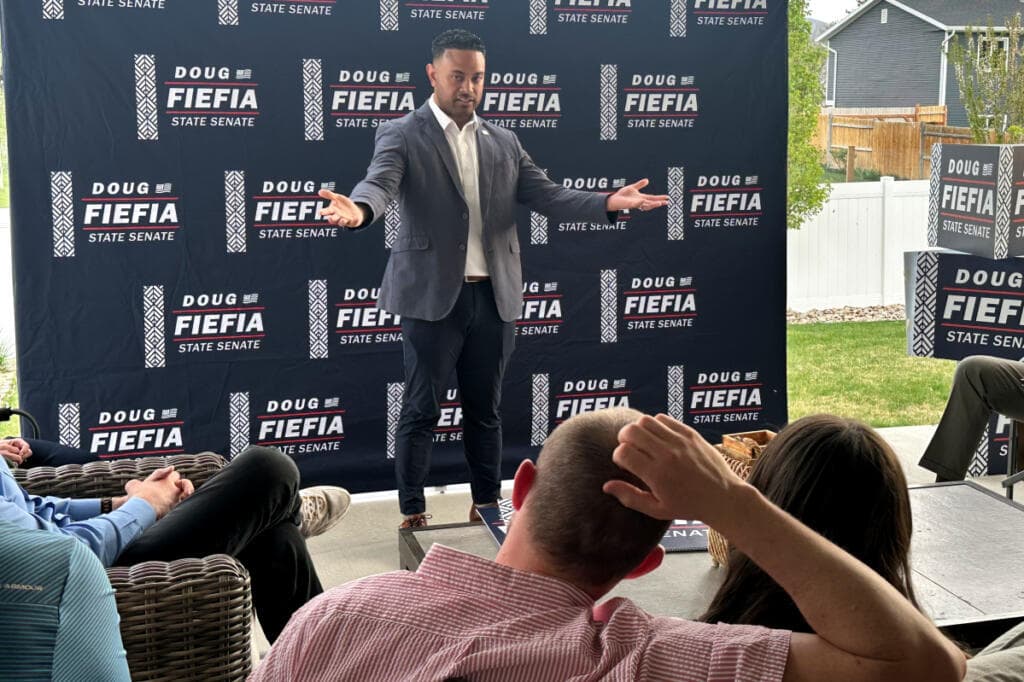
Fiefia, a former Google employee turned state representative now running for state senator, has made AI regulation the cornerstone of his campaign—a stance that puts him squarely at odds with President Trump's push for federal preemption of state AI laws.
The Silicon Valley-to-Statehouse Pipeline
The collision course between Fiefia and the Trump administration highlights a fascinating trend: tech industry veterans are increasingly entering politics with firsthand knowledge of AI's potential dangers. Unlike typical politicians who rely on briefings and expert testimony, these former tech workers bring insider perspective to legislative chambers.
At a recent gathering of Republican activists in Riverton, Utah, Fiefia steered conversation away from traditional conservative talking points—water rights, immigration concerns, and conspiracy theories—to focus on what he sees as the defining technology issue of our time. His tech background lends credibility to arguments that might otherwise be dismissed as regulatory overreach.
Federal vs. State Authority Clash
The Trump administration's position is clear: AI regulation should be handled at the federal level through a single national standard. This approach appeals to the tech industry, which prefers uniform rules across all 50 states rather than navigating a patchwork of varying regulations.
But with Congress making little progress on comprehensive AI legislation, state lawmakers like Fiefia argue they cannot afford to wait. The technology is advancing rapidly, and constituents are demanding action on issues ranging from deepfake pornography to algorithmic bias in hiring.
This tension came to a head earlier this year when the White House helped block Fiefia's proposal requiring companies to include child safety protocols in AI systems. The interference demonstrates how seriously the Trump administration takes its preemption strategy.
Child Safety: The Fault Line
Fiefia's focus on child safety protocols represents a particularly sensitive pressure point in the AI regulation debate. While few politicians would openly oppose protecting children online, the tech industry argues that premature regulations could stifle innovation and push development overseas.
The blocked Utah proposal would have required AI companies to implement safeguards preventing minors from accessing harmful content or being exploited by AI systems. Supporters argue such protections are urgently needed as AI becomes more sophisticated and widespread.
Critics, including federal officials, contend that state-level requirements create compliance burdens that ultimately harm American competitiveness in the global AI race.
The Conservative Dilemma
Fiefia's position creates an interesting dynamic within conservative circles. Traditional Republican principles favor limited government regulation, yet many GOP voters are increasingly concerned about Big Tech's influence and the potential societal disruption from unregulated AI.
This tension reflects broader debates within the conservative movement about how to handle emerging technologies. Some Republicans advocate for minimal government interference, while others push for more aggressive oversight of tech giants they view as hostile to conservative values.
What's at Stake
The outcome of this federal-state conflict will significantly impact how AI development proceeds in the United States. If the Trump administration successfully prevents state regulation, the tech industry gets the uniform regulatory environment it desires, but potentially at the cost of addressing legitimate public concerns about AI safety.
Conversely, if states like Utah proceed with their own AI laws despite federal opposition, we could see a complex legal battle over regulatory authority—with the Supreme Court likely serving as the ultimate arbiter.
Looking Ahead
As Fiefia campaigns for state senate, his AI-focused platform will test whether voters prioritize federal deference or local control over emerging technologies. His success or failure could signal whether other state-level Republicans will challenge Trump administration preferences on tech policy.
The broader implications extend beyond Utah. Other states are watching this confrontation closely, and the precedent set here could influence AI regulation battles nationwide. With congressional action remaining stalled, state lawmakers face pressure to act—regardless of federal preferences.
This clash between a former Google employee turned politician and the Trump administration represents more than just a policy disagreement. It embodies fundamental questions about federalism, technological governance, and whether American democracy can adapt quickly enough to address the challenges of the AI age.
React to this story
Share this story
Stay in the loop
Get breaking presidential news delivered to your inbox daily.