Trump Praises Ousted Navy Secretary Phelan Despite Pentagon Tensions and Leadership Shakeup
Navy Secretary John Phelan was removed amid Pentagon tensions despite Trump's public praise, highlighting internal conflicts over shipbuilding programs and chain-of-command issues. The leadership change comes during critical Middle East operations and broader Cabinet turnover.
Trump's Public Support Contrasts with Internal Pentagon Friction
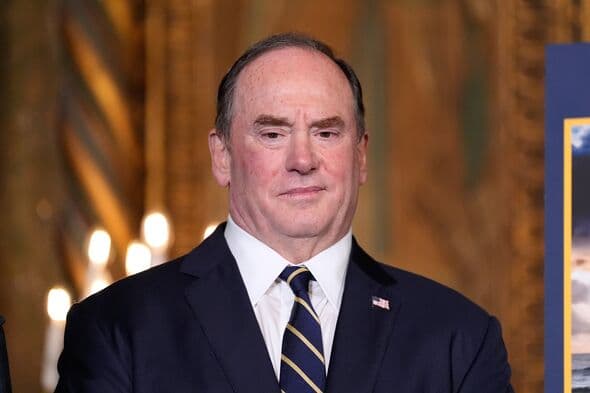
In a move that highlights the ongoing tensions within the Pentagon, Navy Secretary John Phelan was abruptly removed from his position this week, despite President Trump's public praise for the billionaire businessman's service. The dismissal represents the latest chapter in what sources describe as months of escalating conflicts between Phelan and senior Pentagon leadership.
Behind the Scenes: A Tale of Two Narratives
While Trump took to Truth Social to commend Phelan as "a long time friend, and very successful businessman, who did an outstanding job," multiple administration officials paint a starkly different picture. According to Fox News sources, both Defense Secretary Pete Hegseth and Deputy Defense Secretary Stephen Feinberg had grown increasingly frustrated with Phelan's leadership style and decision-making.
The president's glowing assessment stands in marked contrast to internal Pentagon dynamics, where tensions had reportedly "simmered for months." Trump claimed Phelan "decided to move on," while senior administration officials confirmed that Trump and Hegseth "agreed new leadership at the Navy is needed."
Chain of Command Conflicts
A critical flashpoint emerged when Hegseth fired Phelan's chief of staff, John Harrison, in October 2025. Navy insiders reveal that the relationship deteriorated further as Hegseth grew frustrated with Phelan's tendency to bypass the traditional chain of command, taking issues directly to Trump rather than working through the Defense Secretary.
This pattern of circumventing established Pentagon hierarchy reportedly created significant friction within the administration's military leadership structure, contributing to the decision to seek new leadership for the Navy.
Shipbuilding Struggles and Strategic Concerns
Phelan's tenure was marked by persistent challenges in the Navy's critical shipbuilding programs. The Columbia-class submarine program—the Navy's top priority—remains significantly behind schedule and over budget, with delivery delays now pushing the lead vessel's completion into 2029, roughly 17 months late.
Despite Phelan's focus on shipbuilding as a central priority, including launching program reviews and pushing production acceleration initiatives, major Navy construction projects continued to face delays and cost overruns. The Navy invested heavily in addressing these issues, including a $900 million automation initiative for submarine manufacturing in 2026.
Timing Amid Global Crisis
The leadership change comes at a particularly challenging moment for the Navy. U.S. forces are currently confronting escalating tensions in the Strait of Hormuz, where Iranian attacks and mining threats have disrupted this vital global oil chokepoint. The timing underscores the administration's urgency in addressing both operational readiness and long-term strategic capabilities.
Phelan's removal also occurs as Trump has directed the Navy to adopt a "wartime footing" to expand the nation's lagging shipbuilding capacity—a directive that takes on added significance given current Middle Eastern tensions.
New Leadership Profile
Replacing Phelan is Hung Cao, the Navy's under secretary, who brings a dramatically different background to the role. Unlike the businessman Phelan, Cao is a retired Navy captain and special operations officer with over two decades of military service, including combat deployments to Iraq and Afghanistan.
Cao has emerged as a vocal advocate for traditional military culture and standards, taking hardline positions on recruiting and force readiness. His military experience and operational background represent a stark contrast to Phelan's corporate leadership style.
Broader Cabinet Turbulence
Phelan's departure continues a pattern of high-level turnover within the Trump administration. He joins Army Chief of Staff Randy George as the second senior Pentagon official to lose his position in April alone. The broader Cabinet has also experienced significant changes, with Homeland Security Secretary Kristi Noem, Attorney General Pam Bondi, and Labor Secretary Lori Chavez-Deremer all departing since March.
This level of turnover raises questions about internal administration dynamics and the challenge of maintaining consistent leadership during critical operational periods. The frequency of these changes suggests deeper organizational tensions within the administration's senior ranks.
As the Navy faces both immediate operational challenges and long-term strategic rebuilding requirements, the leadership transition represents a critical test of the administration's ability to maintain effective defense governance during a period of global uncertainty.
React to this story
Share this story
Stay in the loop
Get breaking presidential news delivered to your inbox daily.