Trump Administration Pushes Forward $50M South Africa Rare Earth Project Despite Diplomatic Freeze
The Trump administration moves forward with a $50 million South Africa rare earth project despite frozen diplomatic relations. This strategic investment aims to reduce America's dependence on China for critical minerals essential to defense and technology sectors.
Trump Administration Pushes Forward $50M South Africa Rare Earth Project Despite Diplomatic Freeze
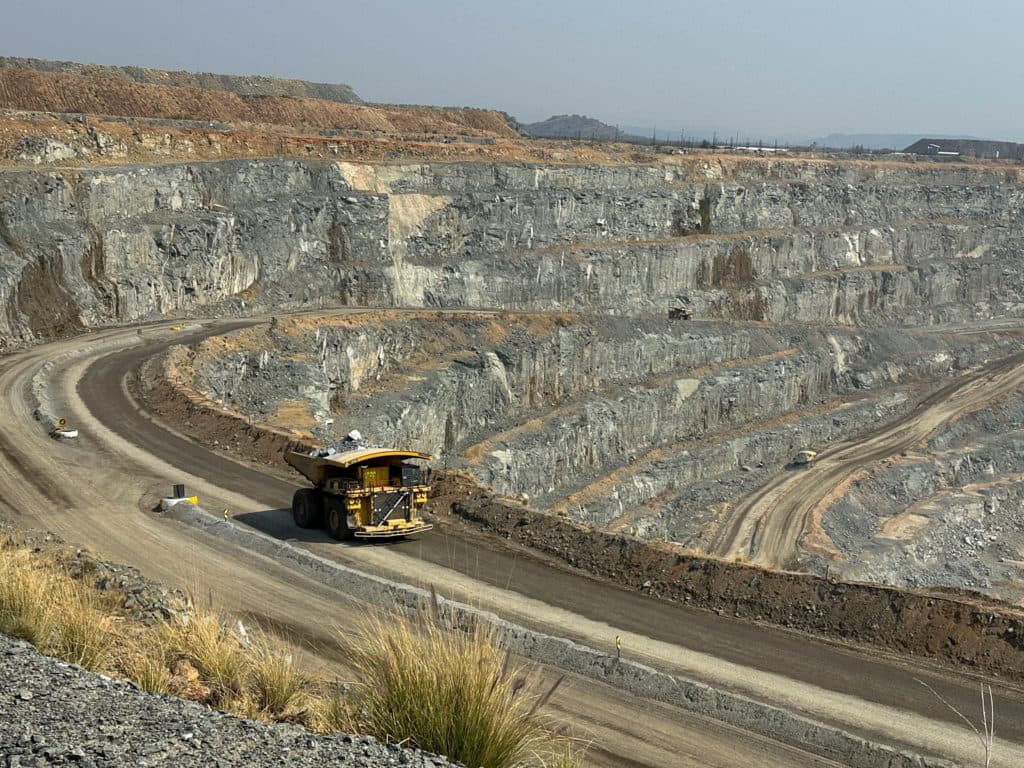
In a move that underscores the strategic importance of critical minerals over diplomatic relations, the Trump administration is moving ahead with a $50 million investment in South Africa's rare earth extraction project, even as U.S.-South Africa relations hit their lowest point in decades.
Economic Interests Trump Diplomatic Tensions
The Phalaborwa Rare Earths Project represents a fascinating case study in how economic security can override political differences. Despite President Trump issuing an executive order in February to halt all financial assistance to South Africa following a major diplomatic rift, the administration has allowed this critical mineral project to proceed.
The $50 million equity investment through the U.S. International Development Finance Corporation (DFC) targets an innovative extraction operation that could help America reduce its dangerous dependence on China for rare earth elements—minerals essential for defense systems, electric vehicles, and cutting-edge technology.
Breaking China's Stranglehold on Critical Minerals
Trump has made expanding U.S. access to critical minerals a cornerstone of his strategy to counter China's economic dominance. The administration announced plans this year to deploy nearly $12 billion to create America's own strategic mineral reserve—a move that signals just how seriously the White House views this national security challenge.
"President Donald Trump has made expanding U.S. access to critical minerals, including rare earth elements, a central policy to counter China," the project documentation reveals. This initiative is part of Trump's broader effort to secure America's technological future and reduce vulnerability to economic rivals.
Revolutionary Extraction Technology
What makes the Phalaborwa project particularly intriguing is its innovative approach. Rather than traditional mining, the operation will extract rare earth elements from two massive dunes of industrial waste—35 million tons of phosphogypsum left over from previous mining operations.
Rainbow Rare Earths, the company developing the project, claims this method will use up to 90% renewable energy and be "significantly less expensive than typical rare earth mining." The company's CEO George Bennett told reporters their primary interest lies in supplying the U.S. defense sector.
"They crushed it, they milled it, they put energy into it, put heat into it, all that to make the phosphogypsum, which is what's needed to make rare earths," explained project director Alberto Bruttomesso. "Heating is the most expensive part of the process. It's what costs the most money."
Strategic Implications for American Technology
The project aims to supply critical elements including neodymium, praseodymium, dysprosium, and terbium—materials essential for high-performance magnets used in wind turbines, electric vehicles, defense systems, and emerging robotics applications. These minerals are the building blocks of 21st-century technology, making their secure supply a matter of national importance.
Neha Mukherjee from Benchmark Mineral Intelligence noted the project's significance: "We do not have enough projects to meet the entire demand outside of China." This stark reality explains why the Trump administration is willing to compartmentalize economic and diplomatic relationships.
America Playing Catch-Up in Africa
The Phalaborwa investment is part of a broader Trump administration strategy to compete with China's dominant position in African mining. Patience Mususa, a mining specialist at the Nordic Africa Institute, observed that the U.S. is "trying to catch up in terms of investment in mining" on the African continent.
The administration is also continuing support for other African mineral projects, including the Lobito Corridor—an 800-mile railway connecting mineral-rich regions of Congo and Zambia to Africa's Atlantic coast. Additionally, the U.S. Trade and Development Agency recently signed a $1.8 million agreement for a feasibility study at Mozambique's Monte Muambe rare earths project.
Timeline and Future Impact
The Phalaborwa project is expected to begin extracting rare earths in 2028 and operate for 16 years. The DFC's $50 million investment will be deployed once construction begins on the processing facility, anticipated for early 2027.
This project represents more than just a mining operation—it's a strategic chess move in the global competition for technological supremacy. By securing alternative sources of critical minerals, the Trump administration is working to ensure America's technological independence and national security remain intact, regardless of diplomatic turbulence with traditional allies.
The success of this South African venture could serve as a model for future U.S. investments in critical mineral projects worldwide, demonstrating that sometimes economic security must take precedence over political disagreements.
React to this story
Share this story
Stay in the loop
Get breaking presidential news delivered to your inbox daily.